Welcome to the SLMN Blog

Shandong Linmo CNC Machine Tool Equipment Co., Ltd.
Insights, Tips, and More from SLMN CNC Machine Tools

How to Choose the Right CNC Working Center for Your Projects?

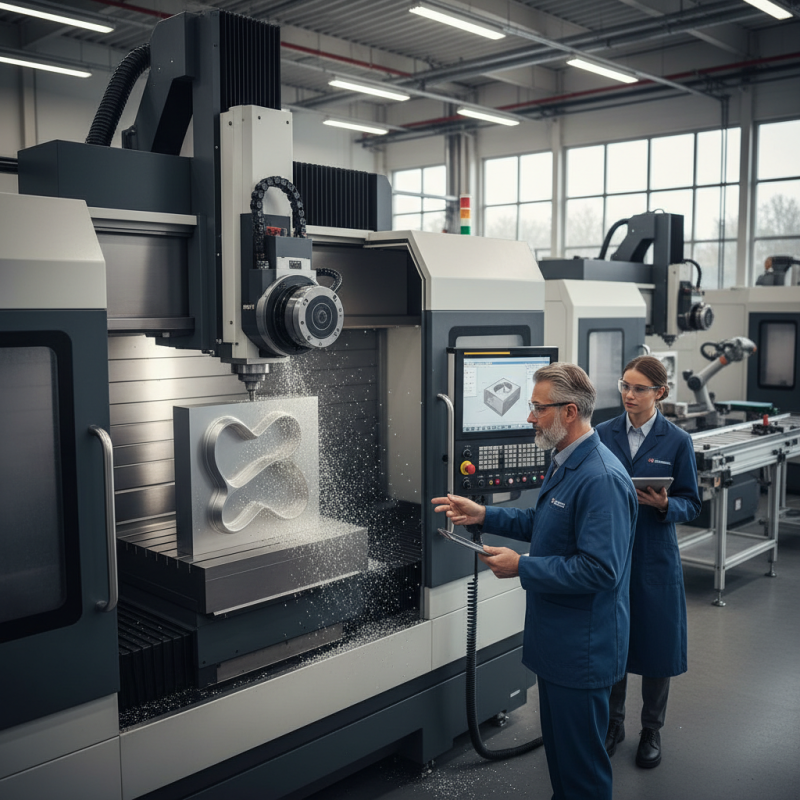
In the fast-evolving world of manufacturing, choosing the right CNC Working Center is critical. Renowned expert John Smith, a leading authority in CNC technology, states, "Selecting the right CNC Working Center can make or break your project's success." This insight underscores the importance of understanding your specific needs.

CNC Working Centers come with various capabilities. They offer different speed, precision, and materials compatibility. Ignoring these factors can lead to costly mistakes. You might choose an option that doesn't align with your project requirements. This decision not only impacts efficiency but can also hinder product quality.

Moreover, every project has unique demands. Choosing a CNC Working Center isn't a one-size-fits-all approach. It requires careful consideration of your project scope and end goals. Reflecting on your choice will help you avoid future regrets. Explore features, test drive machines, and consult professionals to ensure the best fit for your needs.
How to Choose the Right CNC Working Center for Your Projects?

Understanding Different Types of CNC Working Centers and Their Functions

When selecting a CNC working center, understanding the different types is crucial. CNC routers are popular for cutting wood and composites. They excel in detailed carvings and rapid prototyping. Data suggests that about 40% of manufacturers prefer routers for furniture production. Their versatility allows for various thicknesses and materials, but they can struggle with metal jobs.

CNC milling machines, on the other hand, are built for precision. They efficiently process metals and are often used in aerospace and automotive sectors. Reports indicate that CNC milling accounts for roughly 50% of the CNC market share. While they are versatile, the setup can be time-consuming. Additionally, the learning curve can be steep for operators.

Lastly, CNC lathes offer unique capabilities. They are ideal for producing cylindrical parts with high accuracy. Statistics show that lathe operations account for about 30% of machining tasks in small to medium-sized enterprises. However, the limitation lies in their inability to work on complex shapes. These factors highlight the need for careful consideration in choosing the right CNC center for your specific projects.
Assessing the Scale and Complexity of Your Projects for CNC Selection

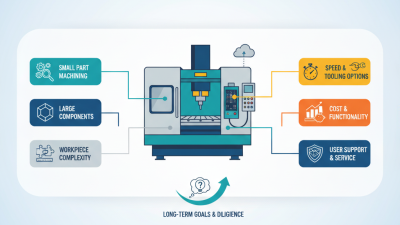
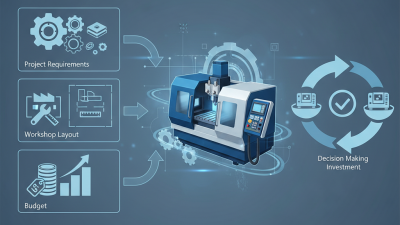
When selecting a CNC working center, understanding the scale and complexity of your projects is crucial. According to a recent industry report, about 35% of manufacturers struggle with choosing the right equipment due to project specifications. Analyzing your project size helps identify the machine's capacity. A smaller project may only require a basic model, while complex tasks demand advanced features like multi-axis capabilities.

Consider the material you will be working with. Different CNC machines handle diverse materials. For instance, aluminum projects might favor machines with higher spindle speeds. Heavy-duty tasks, such as steel machining, need robust machines designed for durability. A lack of alignment here can result in increased costs and time delays.

Tips: Always account for future projects. Investing in a machine solely for a single job may not be efficient. Additionally, test the machine's versatility to avoid limiting your production capabilities. Explore machines with adaptive software; flexibility is key in today's market.

Key Features to Consider When Choosing a CNC Working Center

How to Choose the Right CNC Working Center for Your Projects?

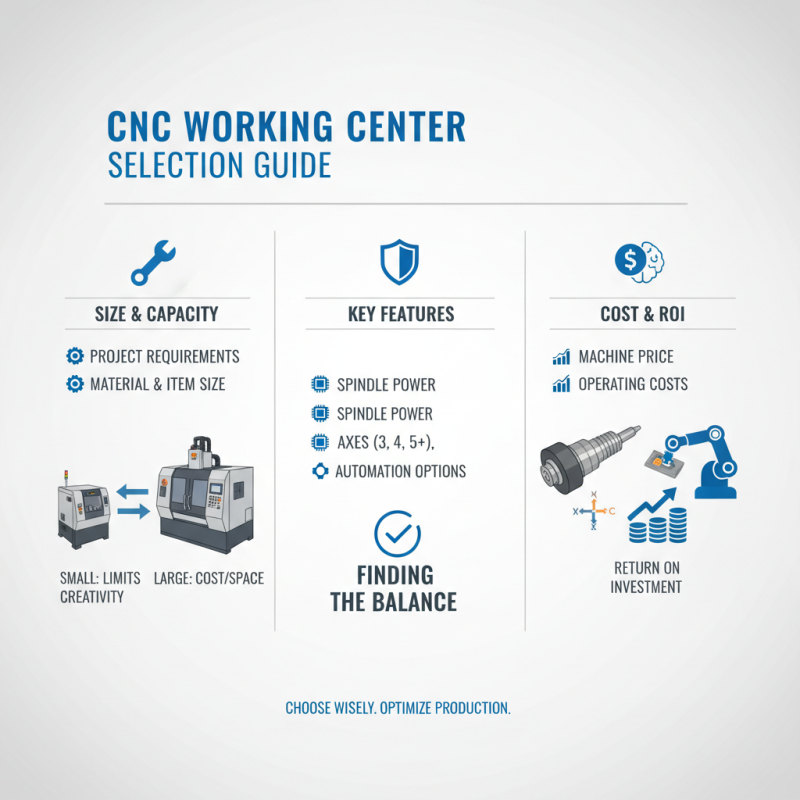
When selecting a CNC working center, several key features are crucial. The machine’s size and capacity should align with your project requirements. Consider both the material you will use and the size of the items you produce. A small machine may limit creativity. A large one can be costly and may require more space. Finding the right balance is essential.

Precision is another important factor. Machines with higher precision can produce intricate designs. However, be aware that some models promise very tight tolerances while failing to deliver consistently. You may have to compromise on precision to stay within budget.

Also, look for user-friendly controls and software compatibility. A complicated interface may slow down production. Some CNC centers integrate well with various design software. But, not every machine is easy to learn. This can lead to frustration during operation. Be ready to invest time in employee training. This is often an overlooked aspect that impacts productivity.

Evaluating Budget Constraints and Cost-Effectiveness for CNC Machines

When selecting a CNC working center, budget constraints play a vital role. Start by assessing your needs. What projects will you tackle? Are they large or small? Understanding the scope helps define your budget accurately. CNC machines can vary significantly in cost. Prices may range from a few thousand to several tens of thousands.

Next, consider the long-term cost-effectiveness of the machine. A cheaper machine may save money initially, but it might lack durability. Frequent repairs or replacements can escalate expenses. Look for machines that offer a balance between initial price and reliability. Additionally, maintenance costs can add up. Take note of any hidden costs, including software and tooling.

Don’t forget the importance of resale value. Some machines depreciate faster than others. If you plan to upgrade in the future, this factor is crucial. Reflect on your choices. A machine that seems ideal now might not suit your future projects. Make decisions based on current needs while considering potential growth. Balancing budget with functionality is key in the CNC landscape.

Identifying Maintenance and Support Needs for CNC Working Centers

Choosing the right CNC working center can be daunting. One essential aspect to consider is maintenance and support needs. A well-maintained CNC machine significantly enhances productivity. Understanding these needs upfront can save time and costs later.

Tips: Always check the ease of accessing spare parts. It's essential for quick repairs. Also, assess if the manufacturer offers adequate support. A responsive support team can make a big difference.

CNC machines require regular maintenance. Lubrication, calibration, and cleaning are crucial. Neglecting these can lead to breakdowns. Create a detailed maintenance schedule. Ensure your team follows it closely. However, even the best plans can fail. It's vital to review and adapt the strategy.

Tips: Document any issues that arise. This information is invaluable for future reference. Track performance metrics to spot trends early. Being proactive can help avoid costly repairs.

Comparison of CNC Working Center Maintenance Needs by Type

This chart represents the estimated annual maintenance hours required for different types of CNC working centers. Understanding these needs can help in choosing the right CNC machine for your projects.

  • Address

    North of Industrial Road, Linqing Economic Development Zone,Liaocheng City, Shandong Province, China

  • Email

    info@lucimagnet.com

  • Phone/WhatsApp

    Angela:0086-13884742546
    Eric: 0086-15688878114

Get in touch with SLMN today. Whether you have questions about our CNC machine tools , or are interested in becoming a distributor, our team is ready to assist you.

© 2025 Shandong Linmo CNC Machine tool Equipment Co.,Ltd. All Rights Reserved.
Privacy Statement Terms & Conditions Sitemap Top Blog

© 2025 Shandong Linmo CNC Machine tool Equipment Co.,Ltd. All Rights Reserved.

Privacy Terms & Conditions Sitemap Top Blog